- 19200Von Karman Ave, Suite 400, Irvine, CA 92612, USA
- Info@rasamglobal.com


L1 VISA - COMPREHENSIVE GUIDE 2026
Your Complete Guide to the U.S. Employment-Based Nonimmigrant Visa
The L-1 visa is a U.S. nonimmigrant work visa for intracompany transferees who are executives, managers, or employees with specialized knowledge transferring from a foreign office to a related U.S. entity, including for opening a new U.S. office
Legal right to work full-time for the sponsoring U.S. company in an executive/managerial or specialized-knowledge role
No annual lottery or numerical cap, unlike H‑1B.
Spouses and minor children can accompany the L‑1 holder; spouses (L‑2) may work in the U.S
Dual intent: L‑1 status can support future employment‑based green card plans.
What is the L1 Visa?
L-1 visa overview
The L-1 category allows multinational companies to move key personnel from an overseas branch, subsidiary, affiliate, or parent company to work temporarily in the United States. It is also available when a foreign company sends a qualifying employee to establish a new U.S. office.
L-1A vs. L-1B
The L‑1 visa has two main subcategories with different eligibility and maximum stay periods.
| Feature | L‑1A – Executives/Managers | L‑1B – Specialized Knowledge |
|---|---|---|
| Role type | Executive or managerial capacity | Specialized company knowledge |
| Typical duties | Directs organization or a major function; sets goals; supervises or exercises high‑level discretion | Applies advanced, company‑specific knowledge of products, services, technology, or procedures |
| New office initial stay | Up to 1 year | Up to 1 year |
| Initial stay (existing office) | Up to 3 years | Up to 3 years |
| Maximum stay | Up to 7 years total | Up to 5 years total |
| Common use | Senior leaders, department heads, functional managers | Key technical/operations staff with unique know‑how |
Who is Eligible for H-1B?
Both the employer and the employee must meet strict L‑1 requirements.
Employer requirements
The U.S. and foreign entities must show a qualifying relationship and active business operations:
Qualifying relationship as parent, subsidiary, branch, or affiliate; can also exist where both entities are controlled by the same company or individual.
The foreign company must continue its business while the employee works in the U.S.; L‑1 is not suitable if the home business would effectively shut down.
For a new office, the U.S. entity must secure sufficient office space and show a realistic plan to support an executive/managerial or specialized‑knowledge role within one year.
Employee requirements
The transferred employee must satisfy all of the following:
Has worked for the foreign company full‑time for at least 1 continuous year within the 3 years before applying, outside the United States.
Will work in the U.S. in either:
an executive/managerial role (L‑1A), or
a role requiring specialized knowledge of the company’s products, services, technology, or internal processes (L‑1B).
For managers: manages the organization or a department/function, supervises professional staff or manages an essential function, and has authority over hiring and firing or similar personnel actions.
- For specialized knowledge: possesses advanced, company‑specific knowledge not readily available in the U.S. labor market.
Validity, extensions, and stay limits
L‑1 status is granted for a limited period, with different rules for new offices and existing operations.
New office approvals: Typically up to 1 year initially, after which the company must show the U.S. operation can support the role for extension.
Existing office approvals: Often granted for up to 3 years initially.
Extensions:
L‑1A can be extended in 2‑year increments up to a maximum of 7 years of physical stay in the U.S.
L‑1B can be extended in 2‑year increments up to a maximum of 5 years.
The key limit is actual time spent in the U.S., not just visa validity; limited exceptions may apply for commuters frequently working outside the U.S.
Note: The visa foil in the passport is only valid together with an approved L‑1 petition; if the petition expires earlier than the visa, work authorization ends when the petition expires unless extended
Application process and key fees
The L‑1 process has distinct stages for the employer (petition) and the employee (consular visa or change of status).
Step 1 – Employer files petition (Form I‑129)
The U.S. employer files Form I‑129 (Petition for a Nonimmigrant Worker) with USCIS, including evidence of:
qualifying corporate relationship
active business operations in both countries
the employee’s prior 1‑year qualifying employment and role description
details of the proposed U.S. executive/managerial or specialized‑knowledge role.
Standard government filing fee for L‑1 petitions is typically $1385 (reduced to $695 for some smaller employers and nonprofits), plus a $500 anti‑fraud fee in many cases.
Optional premium processing is available for an additional $2805, which commits USCIS to act within a short timeframe.
Step 2 – Visa application (consular stage)
After USCIS approves the petition, the employee applies for the actual visa at a U.S. consulate or embassy:
Complete Form DS‑160 online and pay the consular visa fee.
Schedule and attend a visa interview, bringing a valid passport, petition approval notice, employment offer details, and supporting corporate and employment documents.
From fiscal year 2025, L‑1 visa applicants must also pay a $250 “visa integrity fee” at visa issuance, which is mandatory and generally non‑waivable.
If the applicant is already in the U.S. in another status, change of status to L‑1 may be requested on Form I‑129 instead of consular processing, subject to maintaining lawful status.
Blanket petition option
Large, established multinational groups may qualify for an L‑1 blanket petition, which simplifies transfers:
The U.S. entity must generally have been operating for at least one year and meet one of the following:
at least 10 L‑1 approvals in the past 12 months, or
annual U.S. sales of at least $25 million, or
at least 1,000 employees in the U.S..
Once the blanket is approved, eligible managers, executives, and certain specialized‑knowledge professionals can apply directly at the consulate based on the blanket approval, without a separate individual petition first.

Family members and long‑term options
L‑1 status provides important advantages for dependents and for longer‑term immigration planning.
Dependents (L‑2):
Spouses and unmarried children under 21 may receive L‑2 visas to accompany or follow the principal L‑1 holder.
L‑2 spouses may work in the U.S. incident to status, subject to current DHS/USCIS rules, while children may study but cannot work.
Travel: L‑1 holders can travel internationally and re‑enter the U.S. while their petition and visa remain valid.
Pathway to green card:
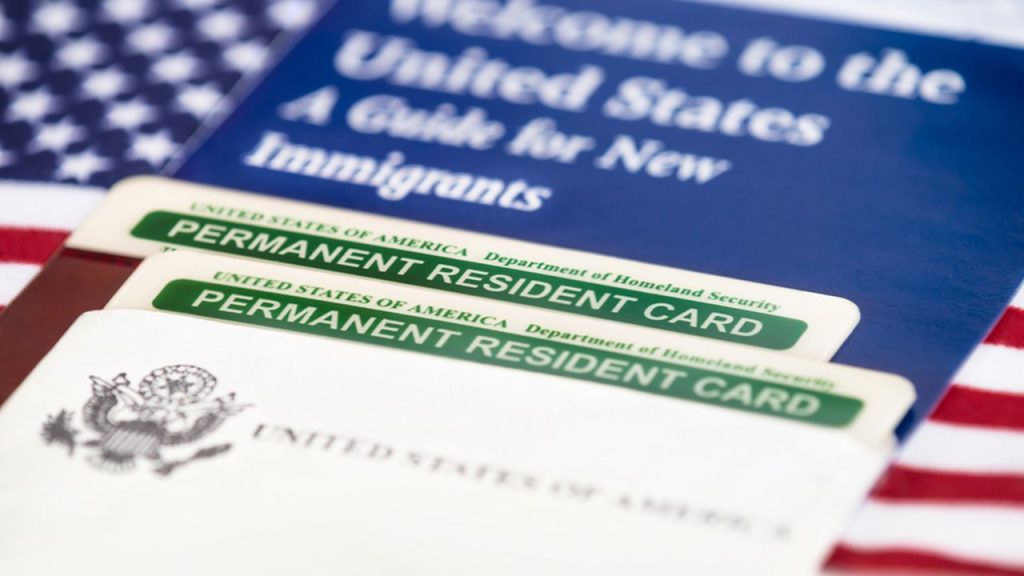
The L‑1 is a dual‑intent visa, allowing holders to pursue permanent residence without jeopardizing nonimmigrant status.
Many L‑1A executives/managers later qualify for the EB‑1C multinational manager/executive green card category, which often does not require labor certification.
Our attorneys advise on questions regarding the L1 visa
We are happy to clarify for you whether you meet the requirements for an L visa or explain other alternatives for a U.S. work visa that exist for your specific case. Please contact us at any time if you would like to make an appointment for a consultation with one of our experts – either by email (info@rasamglobal.com) or by telephone (+1)949 357 8069.