- 19200Von Karman Ave, Suite 400, Irvine, CA 92612, USA
- Info@rasamglobal.com





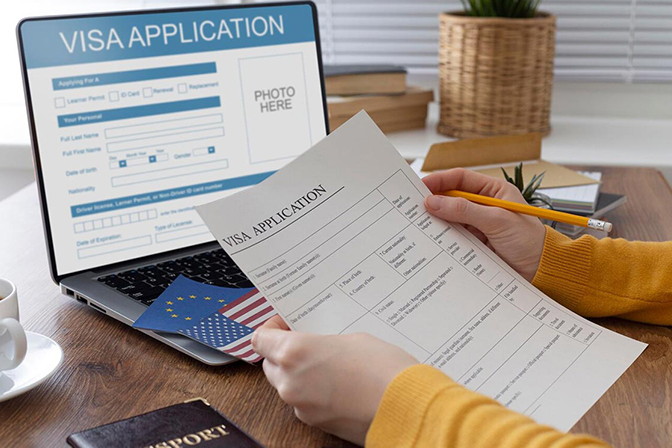

A family‑sponsored green card is U.S. permanent residency obtained through a qualifying relationship with a U.S. citizen or lawful permanent resident (green card holder). It is one of the most common and straightforward paths to living in the United States long term for spouses, children, parents, and certain other relatives.
for any employer (or be self‑employed), without needing a separate work visa.
by naturalization after the required period of permanent residence (typically three years for spouses of U.S. citizens, five years for most others).
in turn once you become a permanent resident or citizen, expanding family reunification over time.
U.S. immigration law divides family‑based cases into Immediate Relatives of U.S. citizens (no annual cap) and Family Preference categories (numerically limited each year).
| Category type | Sponsor status | Eligible relatives (examples) |
|---|---|---|
| Immediate Relatives | U.S. citizen (21+) | Spouse (IR‑1/CR‑1), unmarried children under 21 (IR‑2), parents of a U.S. citizen (IR‑5). |
| Family Preference | U.S. citizen | F1: Unmarried sons/daughters 21+; F3: Married sons/daughters; F4: Siblings of U.S. citizens (sponsor must be 21+). |
| Family Preference | Green card holder (LPR) | F2A: Spouse and unmarried children under 21; F2B: Unmarried sons/daughters 21+ |
To qualify, both the sponsor and the foreign relative must meet certain conditions.
Qualifying relationship: You must prove the family relationship is real and fits an eligible category (for example, a genuine marriage, biological/adoptive parent‑child, or sibling relationship).
Sponsor requirements:
Must be a U.S. citizen or lawful permanent resident, at least 21 years old to sponsor parents or siblings.
Must agree to act as financial sponsor and normally file Form I‑864 (Affidavit of Support) meeting minimum income or asset thresholds.
Admissibility of the intending immigrant: The relative must be admissible or qualify for a waiver (no disqualifying criminal, immigration, or certain health issues).
U.S. citizens can sponsor a wider set of relatives (including parents and siblings) and generally see shorter waits than permanent residents, especially for immediate relatives.
The law treats close and extended family relationships differently for visa availability.
Immediate Relatives of U.S. citizens:
Spouse, unmarried child under 21, and parent (when the citizen is 21+).
No annual visa cap; immigrant visas are always considered “immediately available,” so there is no category‑based waiting list.
Often allows concurrent filing of Form I‑130 and Form I‑485 if the relative is already lawfully in the U.S. and eligible to adjust status.
Family Preference categories (F1–F4, F2A/F2B):
Subject to annual numerical limits and per‑country caps, creating visa backlogs.
Applicants must monitor the Visa Bulletin and wait for their priority date (the I‑130 filing date) to become “current” before they can move to the final green card stage.
This structure prioritizes the nuclear family of U.S. citizens while still allowing broader family reunification over time
Most family‑sponsored green card cases follow two main stages: the petition and the immigrant visa/adjustment stage.
Petition – Form I‑130 (USCIS)
The U.S. citizen or permanent resident files Form I‑130, Petition for Alien Relative, with evidence of the qualifying relationship (marriage certificate, birth certificates, proof of bona fide marriage, etc.).
Approval of I‑130 confirms the relationship and establishes the priority date; it does not by itself grant a green card.
Green card application – inside or outside the U.S.
If the relative is inside the U.S. and eligible:
They may file Form I‑485 (Adjustment of Status) when a visa is available (immediate relatives can often file I‑130 and I‑485 together).
If the relative is outside the U.S.:
After I‑130 approval and visa availability, the case goes through National Visa Center (NVC) and consular processing, including fees, DS‑260, civil documents, and a visa interview at a U.S. embassy/consulate.
After approval and entry/adjustment, the person becomes a lawful permanent resident, receiving a physical green card
Reuniting with loved ones through a family‑sponsored green card can be complex-category, wait times, and documents all matter.
Call our family immigration team today to check your eligibility, choose the right category (immediate relative or family preference), and get a clear step‑by‑step plan for your case.
We are a trusted immigration consultancy providing expert guidance for study, work, visit, and residence visas. Our team supports clients with personalized advice, accurate documentation, and end-to-end assistance for global destinations.
19200 Von Karman Ave, Suite 400, Irvine, CA 92612, USA
(+1) 949 357 8069
Info@rasamglobal.com
1King St W, 48th Floor, Toronto, ON, M5H 1A1, Canada
Tel: (+1) 437 602 5002
Level 10/20 Martin Place, Sydney NSW 2000, Australia
Tel: (+61) 401 988 949